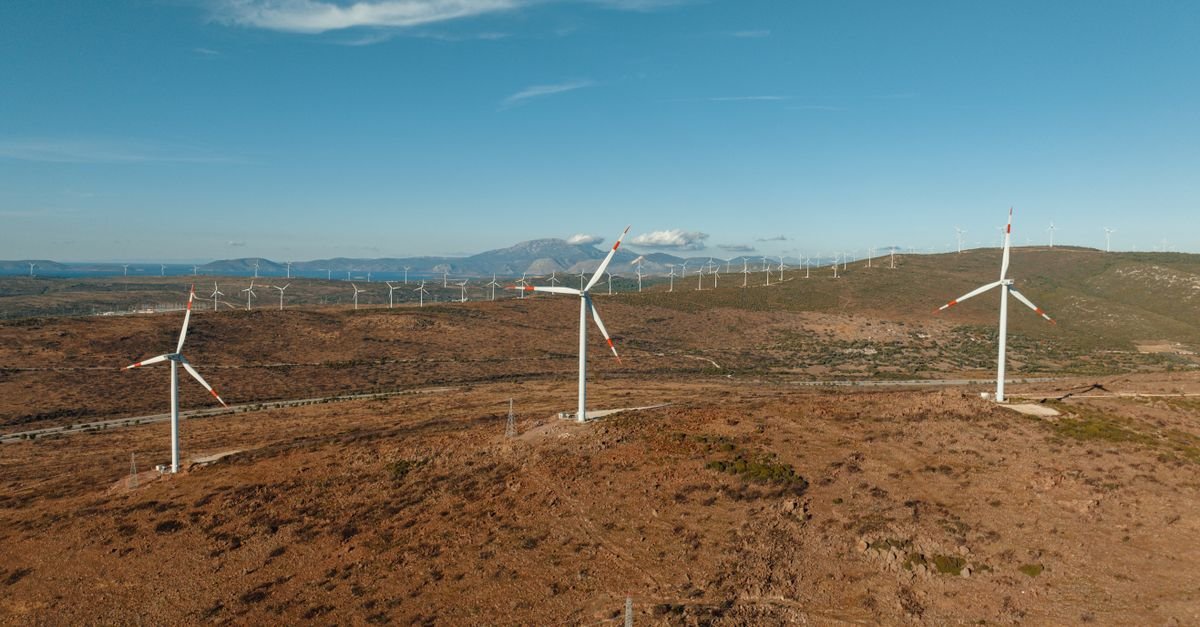
Hybrid offshore systems combining floating wind turbines with wave energy converters offer significant cost advantages for renewable energy generation, but controlling their complex interactions has proven challenging. Researchers have now developed a machine learning solution that substantially improves performance by using reinforcement learning to optimize competing operational objectives simultaneously.
The study integrated a 15 MW floating wind turbine with three wave energy converters on a semi-submersible platform. Wave energy systems and floating platforms operate across different timescales and respond to ocean conditions through complex mechanical interactions. Traditional fixed control rules struggle to balance energy extraction from waves against minimizing platform motion, which is critical for turbine longevity and safety.
The research team trained an RL control algorithm using high-fidelity numerical simulations, allowing the controller to learn optimal decision-making directly through virtual interactions with the hybrid system. This approach captures the intricate dynamics that would be difficult to model analytically. The algorithm evaluates control performance using a Pareto optimization framework, which identifies trade-offs between energy generation and platform stability.
Results demonstrate substantial improvements over conventional approaches. At equivalent platform motion levels, the RL controller achieved over 75% higher wave energy capture. Conversely, for fixed energy output targets, the system reduced platform motion by nearly 50%. These gains expand the operational envelope for HWWE systems, potentially enabling more aggressive wave energy harvesting without compromising structural integrity.
The significance extends beyond performance metrics. By automating complex multi-objective control decisions, RL frameworks reduce engineering design burden and enable adaptive responses to varying sea states. This flexibility could accelerate deployment of hybrid offshore platforms, contributing to cost reduction across the offshore renewable sector. Future work may focus on real-world validation, controller robustness under model uncertainties, and scaling to commercial deployment scales.