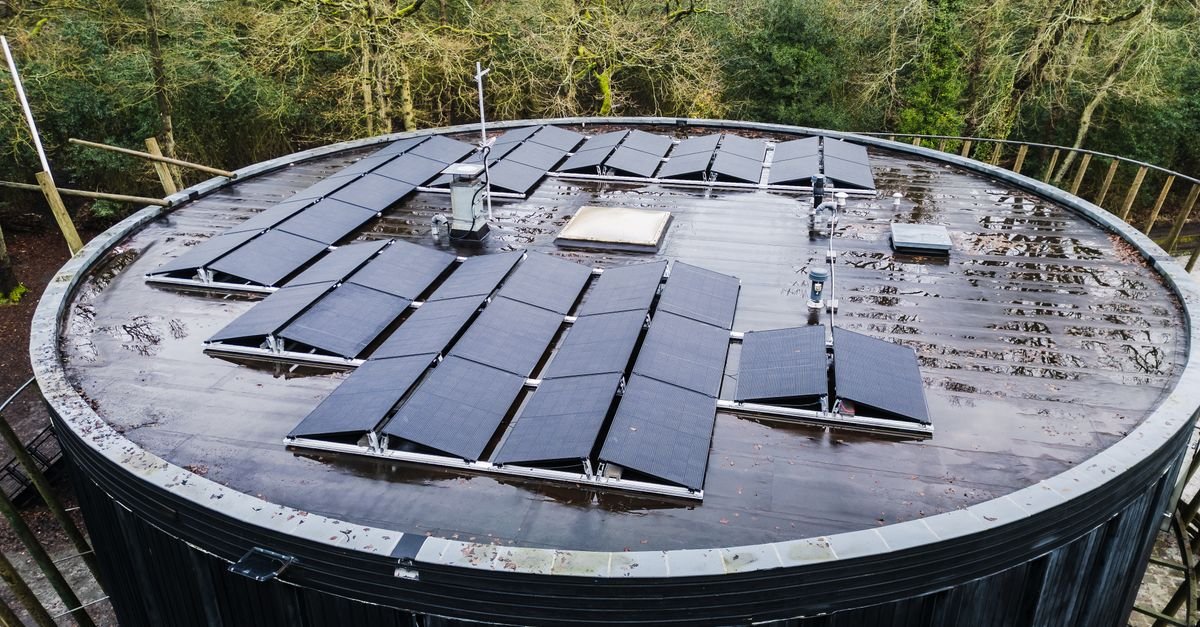
A new experimental and computational study demonstrates that bio-hybrid nanofluids containing titanium dioxide and chlorophyll significantly improve the performance of photovoltaic-thermal (PVT) solar water-heating systems. Researchers prepared 0.5 wt.% concentrations of TiO2/chlorophyll and Al2O3/water nanofluids and tested them in a flat-plate PVT collector under real outdoor conditions, validating results against a three-dimensional CFD model.
The TiO2/chlorophyll nanofluid delivered the strongest results: thermal efficiency of 38.74%, electrical efficiency of 12.61%, and combined overall efficiency of 51.35%. By comparison, conventional water achieved only 27.77% thermal and 40.18% overall efficiency. The performance gain stems from three mechanisms: enhanced thermal conductivity that removes heat more effectively from the photovoltaic cells, improved surface wettability that promotes fluid contact with collector surfaces, and additional light absorption by chlorophyll that contributes to the thermal energy harvest.
The validated CFD model revealed that the optimal nanofluid concentration is approximately 3 vol.%, balancing competing effects of thermal conductivity gains against pressure drop and entropy generation penalties. At this concentration, the system minimizes irreversibilities while maximizing the thermal performance factor—a key metric for PVT design.
These results address a critical limitation in conventional PVT systems: low-efficiency heat removal allows photovoltaic cells to overheat, reducing electrical output by 0.4 to 0.5% per degree Celsius above standard test conditions. By keeping cells cooler while extracting more useful thermal energy, bio-hybrid nanofluids offer a dual benefit that translates directly to higher annual energy yield.
The study represents the first comprehensive investigation of chlorophyll-containing nanofluids in PVT applications, opening new avenues for sustainable and high-performance solar thermal systems. Further research should examine long-term stability, cost-benefit analysis, and scaling for utility-scale installations.