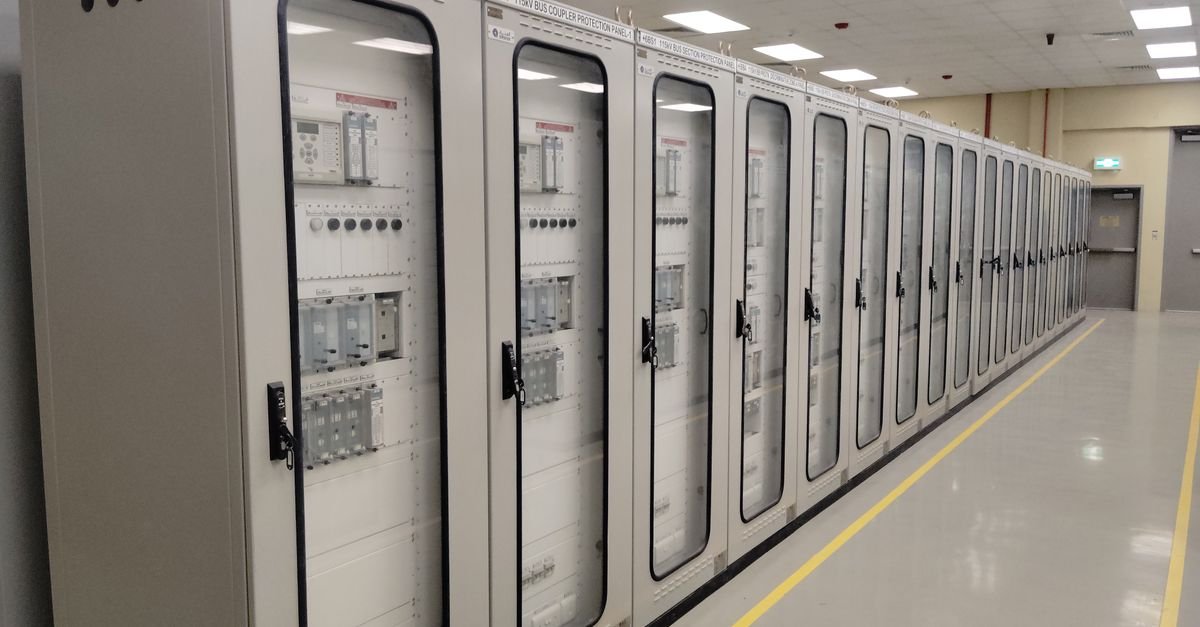
Data centers consume enormous quantities of energy and reject substantial waste heat, creating both an environmental challenge and a missed opportunity for energy recovery. Researchers have developed an innovative combined cooling and power (CCP) system that integrates geothermal resources with data center waste recovery, enabling simultaneous power generation and cooling while maximizing thermodynamic efficiency.
The proposed system couples an organic Rankine cycle (ORC) with an absorption refrigeration cycle (ARC), creating a strongly integrated configuration. Geothermal water is cascaded through both cycles sequentially: first driving the ORC evaporator to generate electricity, then supplying the ARC generator for cooling production. Data center waste heat and residual heat from the absorption process are further recycled to preheat the ORC working fluid, minimizing thermal losses throughout the system.
Thermodynamic modeling and multi-objective optimization revealed that while R245fa delivered superior efficiency metrics in isolation, R601a provided the best overall economics when balancing performance, cost, and equipment compatibility. At optimal conditions, the system achieved 40.34% exergy efficiency—a significant improvement over conventional approaches—with annual operating costs of $130,290 and a static payback period of 4.62 years.
Comparison with a simplified reference system demonstrated concrete benefits: net power output increased from 274.31 kW to 286.97 kW, exergy efficiency improved by 1.65 percentage points, and cooling capacity remained stable. Sensitivity analysis indicated the system maintains stable operation under moderate waste-heat fluctuations, critical for real-world deployment where data center thermal loads vary continuously.
Economic viability depends primarily on electricity prices and annual operating hours, suggesting the system is most attractive in regions with high-value electricity markets or facilities operating continuously. This approach represents a meaningful advancement in sustainable data center design, enabling operators to reduce carbon footprints while generating revenue from previously wasted thermal energy.