Underground hydrogen storage in deep saline aquifers represents a promising strategy for long-term energy storage, but dissolution of hydrogen into formation fluids remains a significant uncertainty affecting project viability. Researchers at the Ketzin pilot site conducted systematic laboratory experiments to quantify hydrogen solubility across a range of subsurface conditions representative of storage reservoirs.
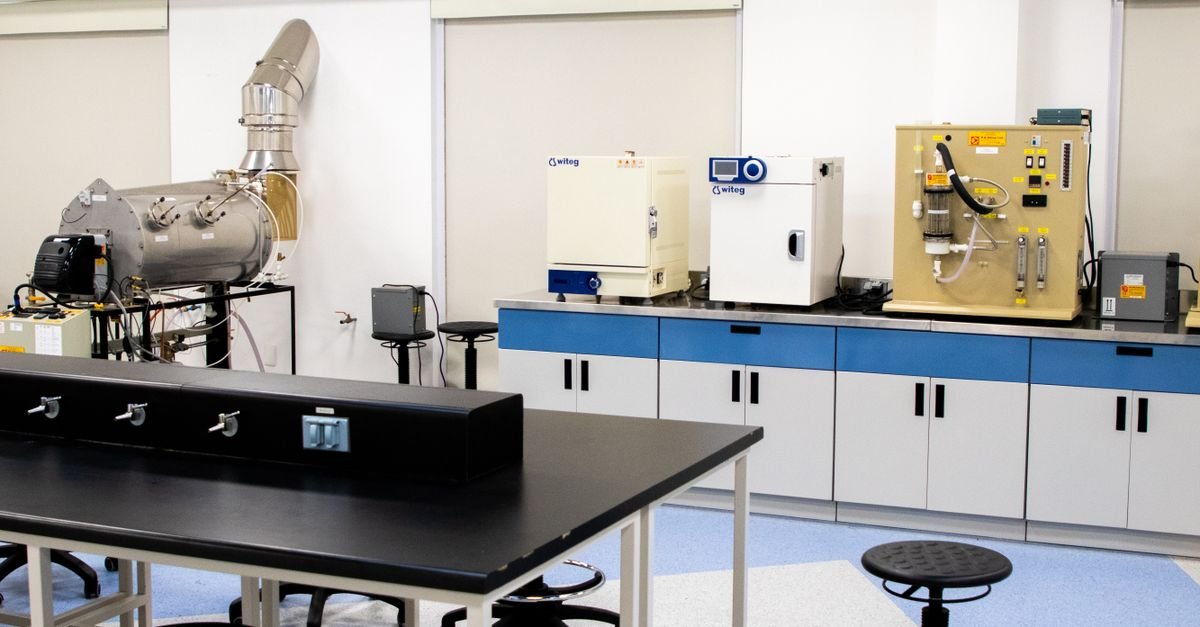
Using high-pressure autoclave equipment, the team measured hydrogen dissolution behavior in three fluid systems: distilled water, synthetic NaCl brines, and actual reservoir brines from Ketzin. Experiments spanned temperatures from ambient to 373 K and pressures to 200 bar, covering conditions found at typical storage depths. Results confirmed that hydrogen solubility increases with pressure—a favorable characteristic for containment. Temperature effects proved modest and sometimes counterintuitive, exhibiting the well-known hydrogen inversion phenomenon in pure water.
A critical finding emerged when testing saline solutions: dissolved minerals substantially reduced hydrogen solubility compared to pure water through a pronounced salting-out effect. Natural reservoir brines from Ketzin showed even stronger suppression of hydrogen dissolution due to their complex multi-ion composition and higher ionic strength. At conditions representative of actual storage formations, only a small percentage of injected hydrogen is predicted to dissolve into the surrounding brine.
This experimental work generated the first comprehensive solubility dataset for natural, multi-ion reservoir brines—a significant advance for the hydrogen storage community. Previous models relied on data from synthetic solutions or pure water, introducing uncertainty into loss projections. The new dataset enables more accurate thermodynamic calculations and reservoir simulations, allowing engineers to better predict hydrogen retention efficiency, assess dissolution-driven losses, and optimize injection strategies. These results support risk assessments and performance guarantees for emerging underground hydrogen storage projects in saline formations across Europe and globally.