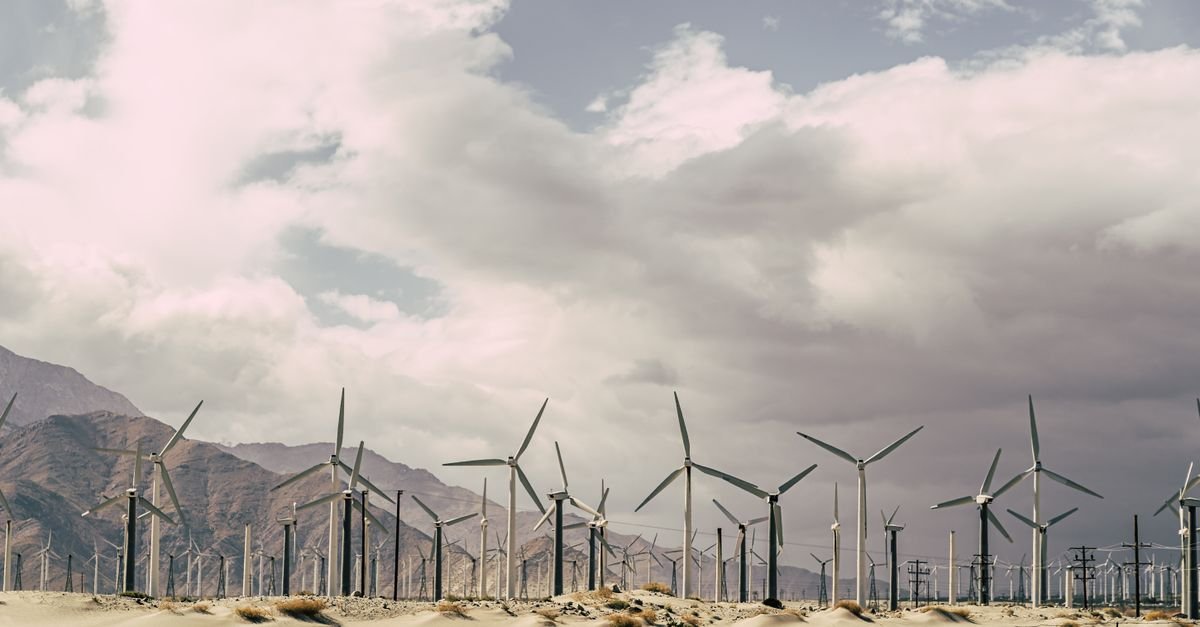
A comprehensive technoeconomic assessment of wind power development near the GolGohar Sirjan Mining and Industrial Company in Kerman Province, Iran, has revealed significant challenges for small-scale wind farm deployment in the region. Researchers conducted a multi-year analysis combining measured meteorological data from 2020–2023 with historical satellite-based wind modeling spanning 1994–2019 to characterize the wind resource at 12 candidate locations.
The study employed WindPRO software to simulate energy production from a Vestas V20 turbine rated at 100 kW with a 60-meter hub height. Results indicate persistently low-wind conditions, with an area-wide average wind speed of 4.6 m/s at hub height. Wind resource classification ranged from Class 1 to Class 2, with Chahmil Village emerging as the optimal site, generating 205.1 MWh annually and achieving a 23.4% capacity factor. The broader dataset showed an average capacity factor of 12.5% across all locations, translating to an overall system efficiency of 22.1%.
Economic modeling revealed a baseline levelized cost of energy of €311.2/MWh, with considerable sensitivity to discount rates, ranging from €229.1 to €404.6/MWh. This cost structure positions wind development at a disadvantage relative to grid electricity in most Iranian markets and substantially above international benchmarks for wind competitiveness.
Environmental assessments demonstrated that operational concerns remain within acceptable parameters. Turbine noise levels approximated 45 decibels, meeting regulatory standards, while visual and shadow flicker impacts proved manageable given the industrial setting.
The findings underscore a critical principle in renewable energy development: site-specific wind climatology and local economic conditions fundamentally determine project viability. While the GolGohar region's wind resource is insufficient to support economically competitive turbine deployment, the methodology and assessment framework provide valuable guidance for evaluating wind potential in comparable arid and semi-arid mining regions across the Middle East and Central Asia.