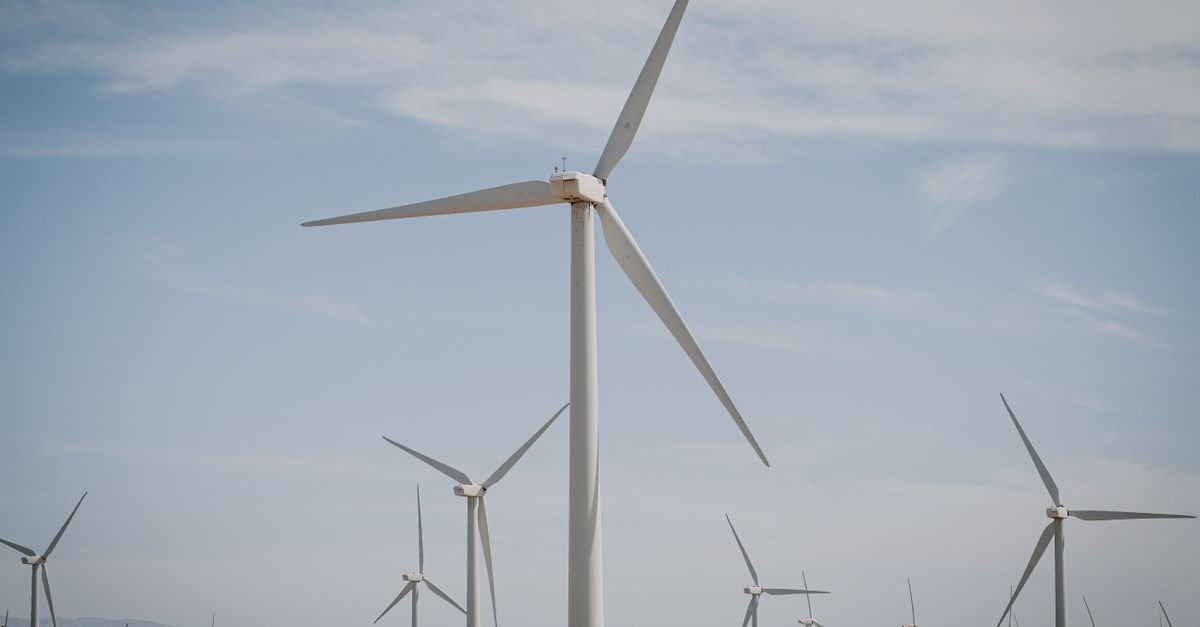
Leading-edge erosion degrades wind turbine blades over time, reducing power output and increasing maintenance costs. Detecting erosion severity early through machine learning offers operators a path to optimize maintenance schedules and extend asset life. However, training these detection systems typically requires vast amounts of labeled data generated through computationally expensive full-physics simulations, making practical deployment challenging.
Researchers addressed this bottleneck by developing a surrogate model based on Gaussian process emulation. Rather than running thousands of expensive OpenFAST aerodynamic simulations, the team trained a Gaussian process on a modest number of full simulations, then used it to generate large synthetic datasets cost-effectively. The key innovation was incorporating output constraints into the emulator, ensuring predictions remained physically consistent and properly calibrated for uncertainty.
The team evaluated their approach by training two random forest classifiers: one on actual simulation data and one on emulator-generated synthetic data. Both classifiers were tested on held-out simulation data across five erosion severity levels. The results showed the emulator-trained classifier matched the performance of the simulator-trained version, validating the surrogate's effectiveness.
This advance has direct implications for wind farm operations. By reducing the computational burden of generating training datasets, operators can deploy more sophisticated health monitoring systems without excessive modeling costs. The constrained vector-valued Gaussian process framework also produces better-calibrated uncertainty estimates, improving decision-making confidence.
Looking ahead, this surrogate-model approach integrates naturally with digital-twin technologies, where virtual models mirror physical assets in real time. Combining efficient data generation with machine learning creates a practical pathway for condition-based maintenance, potentially saving operators millions in unnecessary repairs while maximizing turbine availability and output.