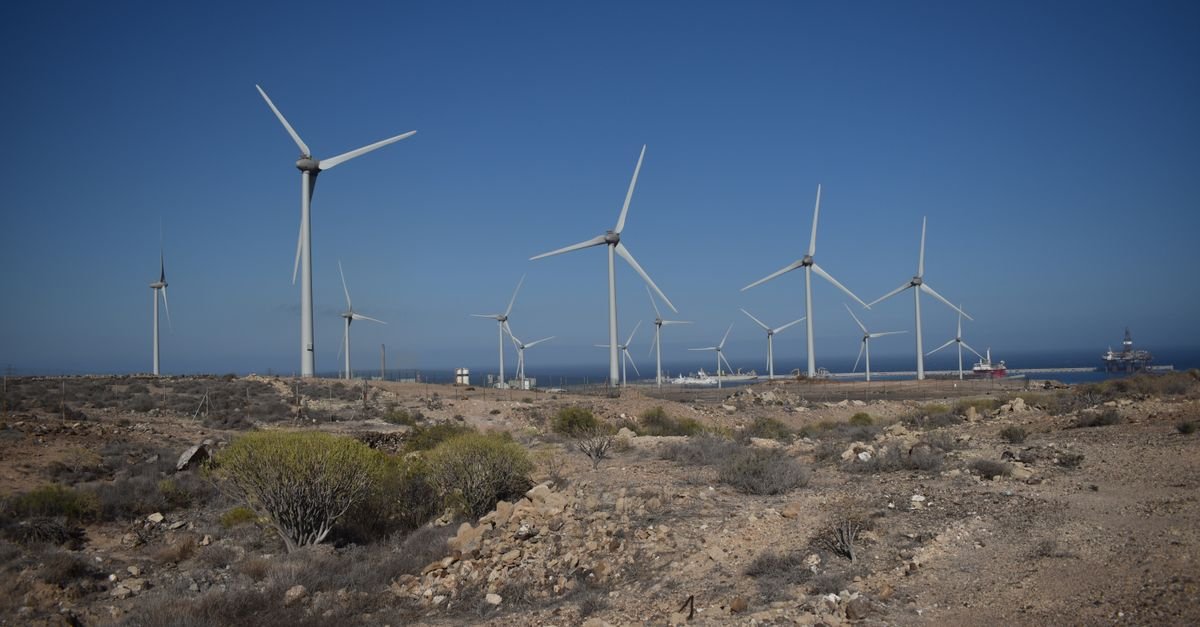
As renewable energy penetration increases globally, power systems face growing challenges in maintaining frequency stability during unexpected disturbances. Unlike conventional synchronous generators, wind and solar plants respond differently to grid events, creating multi-scale disturbances that range from milliseconds to minutes. Current frequency stability assessment methods struggle to handle this diversity uniformly.
Researchers have now proposed a response-based assessment framework that uses actual generator electrical responses to infer disturbance characteristics. The method automatically classifies unanticipated events into short-term transient disturbances and permanent changes, further subdividing permanent disturbances by their time signature: step changes, second-level slope changes, and minute-level slope changes.
The core innovation lies in constructing a unified disturbance-power model from measured generator responses. This model identifies disturbance type online and quantifies intensity through disturbance power and its rate of change. For each disturbance class, the researchers derived analytical frequency-response models that determine critical stability margins.
For step disturbances, the method computes the maximum tolerable disturbance power under both steady-state and transient frequency deviation constraints, enabling operators to define safety margins. For slope-type disturbances, the framework uses an improved system frequency response model combined with rotor motion equations to calculate how long frequency deviation may exceed acceptable limits before primary frequency regulation is exhausted.
Validation on the CSEE-FS frequency-stability benchmark system confirms the method's accuracy and effectiveness. This development addresses a pressing need in modern grids where traditional assessment tools fail to capture the complex, multi-timescale behavior of high-renewable systems. The quantitative approach enables real-time stability monitoring and informs grid operators on disturbance tolerance limits, ultimately supporting safer, more reliable operation of renewable-dominated networks.