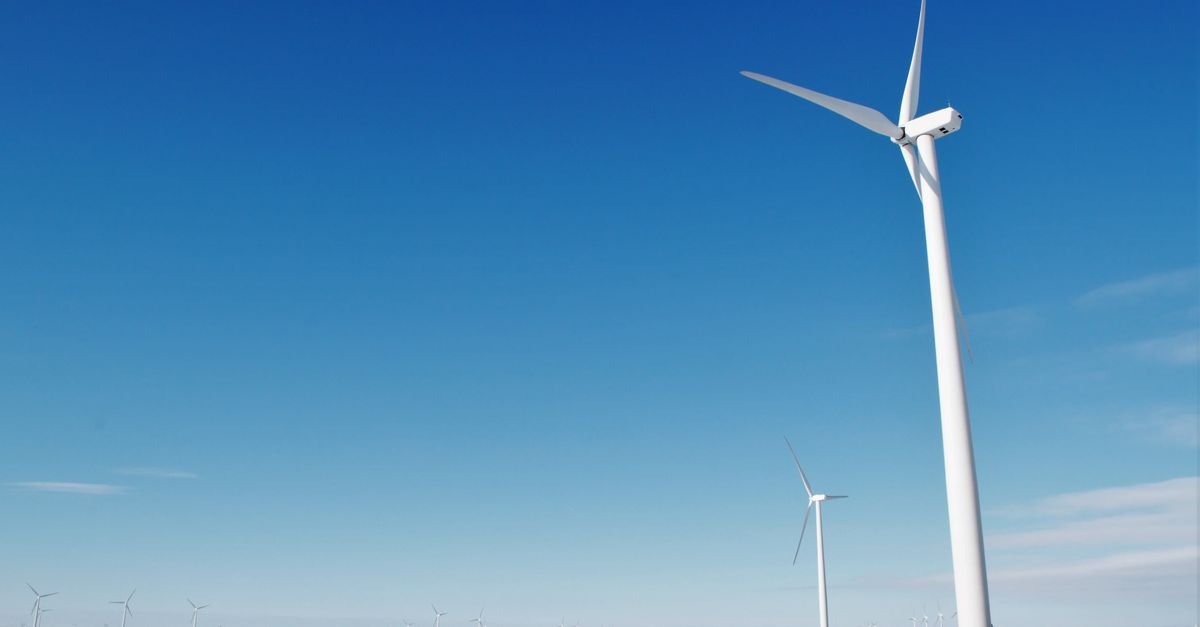
The National Renewable Energy Laboratory and collaborating partners have completed a comprehensive experimental campaign investigating aerodynamic performance and structural loading in downwind-oriented wind turbine configurations. Unlike conventional upwind designs where the rotor faces the wind, downwind turbines position the rotor behind the tower, a configuration that offers potential advantages in yaw control and structural dynamics but has faced industry skepticism regarding impulsive blade loading and low-frequency noise emission.
The investigation focused on a 1.5 MW test turbine, with researchers instrumenting both blade and tower surfaces using specialized pressure measurement belts. Two five-hole probes captured localized inflow conditions at specific blade radial positions, enabling detailed reconstruction of aerodynamic forces during blade-tower passage events. The measurement campaigns successfully collected data despite difficult atmospheric conditions, yielding high-quality datasets suitable for engineering validation work.
Key findings quantify impulse loading characteristics previously cited as problematic in downwind designs. Measurements revealed impulse magnitudes ranging from 100–150 N/m on tower surfaces and 200–500 N/m on blade sections, occurring over approximately 0.3-second intervals during blade-tower interaction events. These temporal and spatial measurements provide engineers with concrete performance parameters for downwind turbine designs.
A critical technical contribution involved dynamic reconstruction of pressure measurements acquired across the full 10.7-meter pressure belt lengths. This reconstruction methodology proved essential for accurately capturing transient loading phenomena that occur during blade passage.
The resulting experimental dataset addresses a significant gap in downwind turbine validation resources. High-fidelity computational fluid dynamics models, including full three-dimensional rotor simulations that account for tower-induced flow effects, require detailed experimental validation data. This NREL campaign provides precisely such data, supporting continued development of downwind configurations that may offer reliability and performance benefits over traditional upwind designs.