Power systems increasingly integrate renewable energy sources alongside conventional synchronous generators, creating hybrid networks that behave differently during electrical faults than traditional grids. Researchers have now provided clarity on how these mixed systems maintain synchronization stability during transient disturbances, bridging classical power system theory with modern renewable energy dynamics.
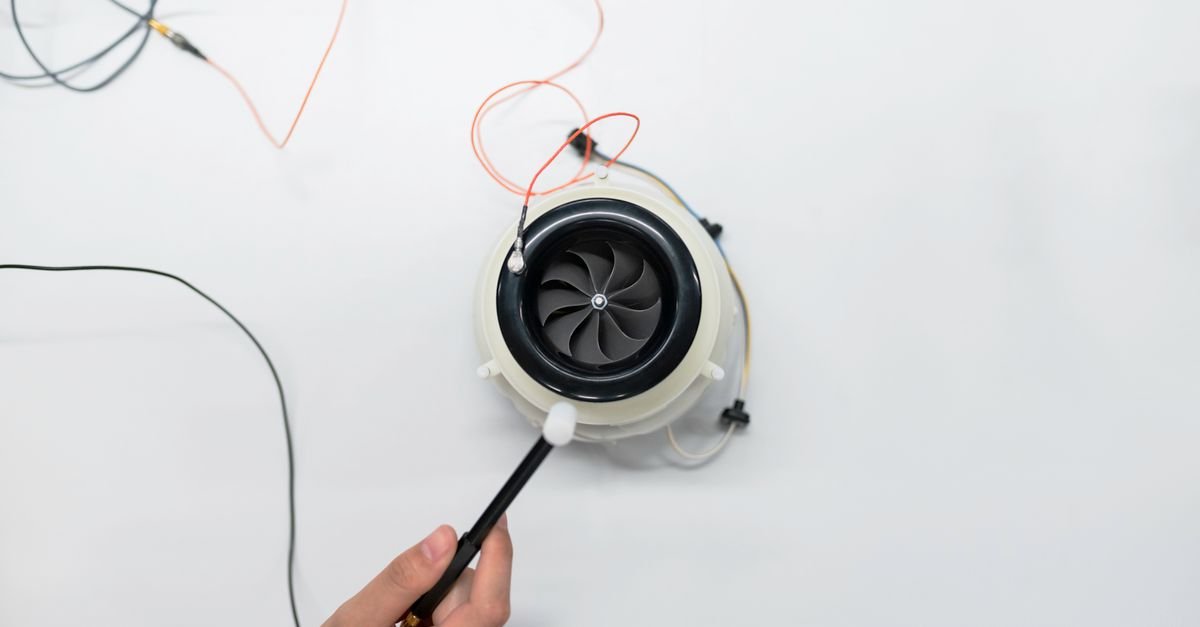
The study focuses on systems containing a synchronous generator (SG) operating in parallel with a doubly fed induction generator (DFIG)—a common wind turbine configuration. A key innovation is the systematic analysis of the complete low-voltage ride-through (LVRT) process, which describes how wind turbines are required to stay connected and support the grid during voltage dips caused by faults. The researchers divided fault transients into four distinct stages: pre-fault, during-fault, early post-fault, and late post-fault, each with different electromagnetic behavior.
Using hardware-in-the-loop experiments and detailed simulations, the team derived a generalized swing equation (GSE) that simplifies the complex dynamics of SG-DFIG systems into a unified mathematical framework similar to traditional SG-SG systems. This reduces computational burden while maintaining accuracy. Importantly, the improved equal area criterion method accounts for two previously underestimated effects: frequency jump and nonlinear damping during transients.
The practical significance is substantial. Grid planners and operators can now evaluate transient stability more efficiently using analytical methods rather than time-consuming electromagnetic simulations. Understanding when and why DFIGs enter LVRT mode—findings show most faults trigger this response—helps predict sequential switching behavior that affects grid stability.
This research establishes a clearer physical picture connecting hybrid renewable-conventional systems to established transient stability theory. As renewable penetration increases globally, such analytical tools become essential for maintaining reliability while accelerating the energy transition. The work validates that despite increased complexity, systematic analysis can render hybrid systems tractable using engineering principles familiar to the power industry.