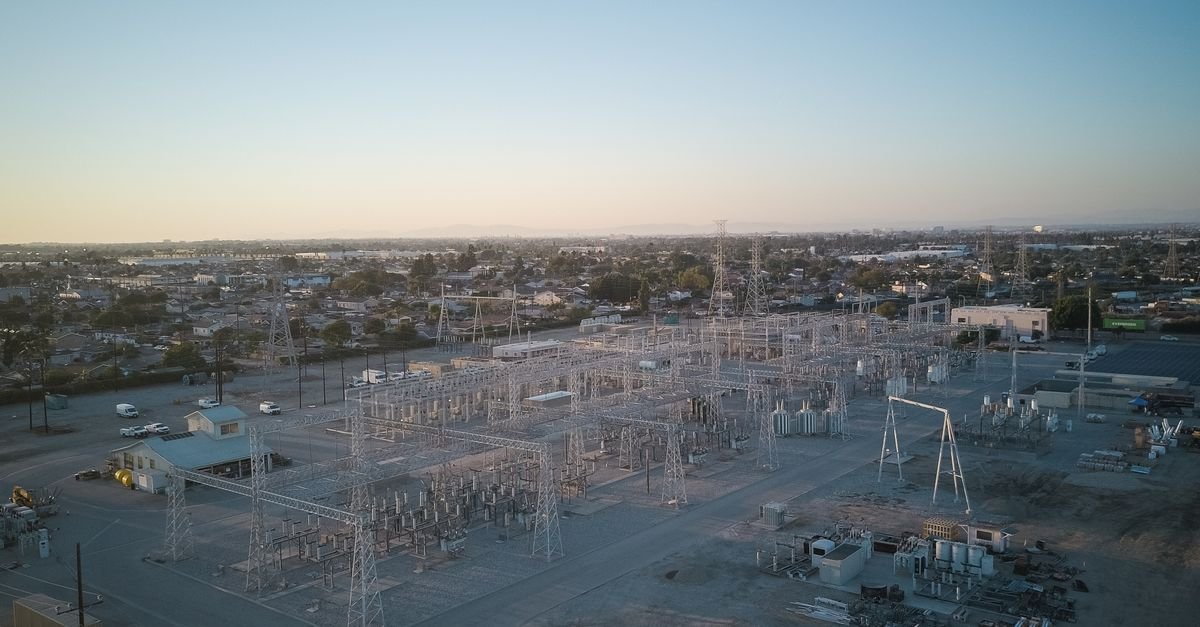
Inverter-based resources such as solar and wind installations are rapidly displacing conventional synchronous generation, fundamentally changing how power systems respond to disturbances. Unlike traditional generators, these devices rely on power electronics and control algorithms, making their dynamic behavior more complex and harder to monitor using conventional methods. High-resolution waveform measurements from these resources contain valuable information about grid events, but processing this data at scale requires automated, reliable detection systems.
Researchers have addressed this challenge by converting raw time-series waveforms into spectrograms—two-dimensional representations that reveal frequency content and transient behavior over time. Using short-time Fourier transforms, each waveform measurement is transformed into a visual pattern that more explicitly shows harmonic signatures and transient features compared to raw waveform data. These spectrogram images are then processed using object detection methods, recasting the event identification problem as a computer vision task rather than traditional signal processing.
The framework detects events, determines their precise timing within the waveform, and classifies the disturbance type—all simultaneously. Testing on real-world scenarios including single-phase faults and three-phase faults demonstrated consistent improvements over baseline methods that operate directly on raw time-series data. The spectrogram approach captured subtle frequency shifts and harmonic distortions that correlate with specific fault types, enabling more accurate classification.
This work has immediate implications for grid operators deploying large quantities of renewable generation. Accurate, automated event detection enables faster fault isolation, better protection coordination, and improved situational awareness. As inverter-based resources continue to increase their share of generation capacity, robust methods for detecting and classifying their dynamic responses become critical infrastructure requirements. The spectrogram-based approach offers a practical pathway to implement machine learning-driven monitoring systems in modern grids.