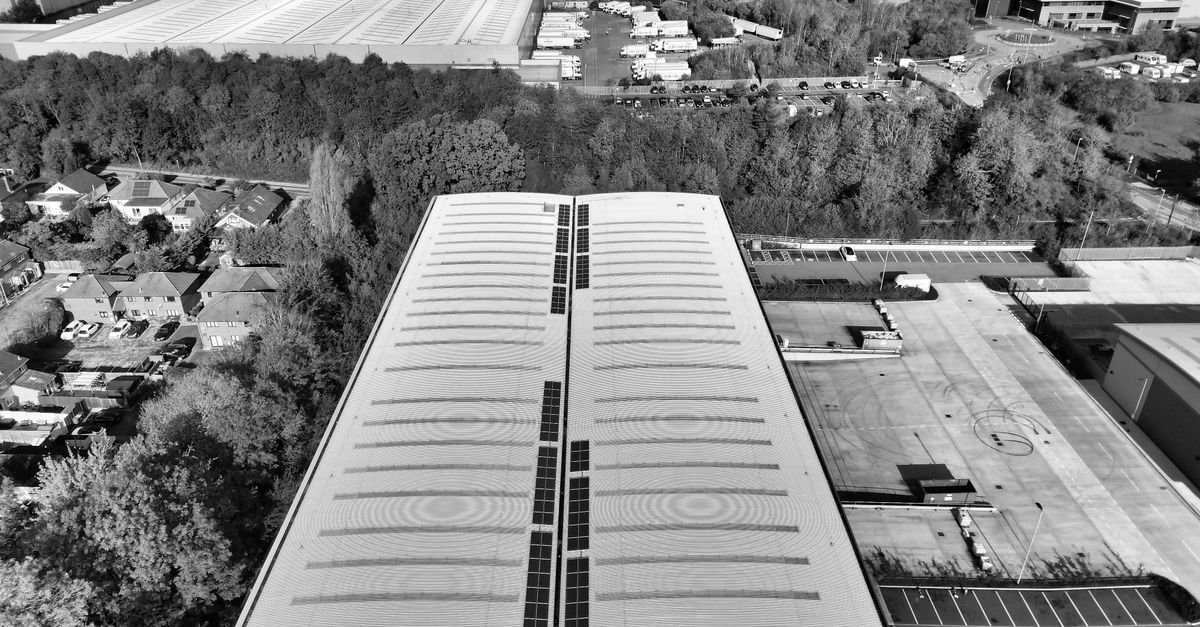
The rapid adoption of distributed solar photovoltaic systems in urban areas has created a need for more precise measurement of local carbon intensity—the amount of greenhouse gas emissions per kilowatt-hour of electricity consumed. Unlike grid-wide carbon intensity, which is uniform across a utility's service territory, local intensity varies significantly based on proximity to renewable generation and grid constraints within neighborhoods.
Researchers have developed a novel framework to quantify carbon intensity factors at the district level, accounting for both spatial and temporal variations. In a test city, carbon intensity ranged from zero to 316 grams of CO₂ equivalent per kilowatt-hour during a single summer afternoon, demonstrating substantial variation across neighborhoods. These differences arise because nearby solar generation directly offsets local consumption, reducing reliance on distant, often fossil-fueled plants.
The team created a surrogate model—a simplified mathematical representation—that estimates local carbon intensity using limited input data typically available to municipalities and grid operators, such as census information and basic grid topology. Two approaches were tested: traditional decision tree algorithms and modern neural networks. Both performed well, with neural networks showing superior accuracy, especially in densely developed areas.
The practical implications are significant. Building management systems, EV charging networks, and district heating platforms can use these localized estimates to optimize when and where energy is consumed, shifting demand toward periods when local renewable generation peaks. The research demonstrated that ignoring spatial variations in carbon intensity can introduce errors exceeding 9% in emission accounting for individual buildings—a material discrepancy for organizations tracking sustainability targets.
The surrogate model's transferability across regions with different data availability makes it particularly valuable for cities with incomplete grid information. As urban electrification accelerates and prosumer participation grows, high-resolution carbon intensity data becomes increasingly important for achieving municipal decarbonization goals and supporting intelligent, emission-aware energy management at the district level.