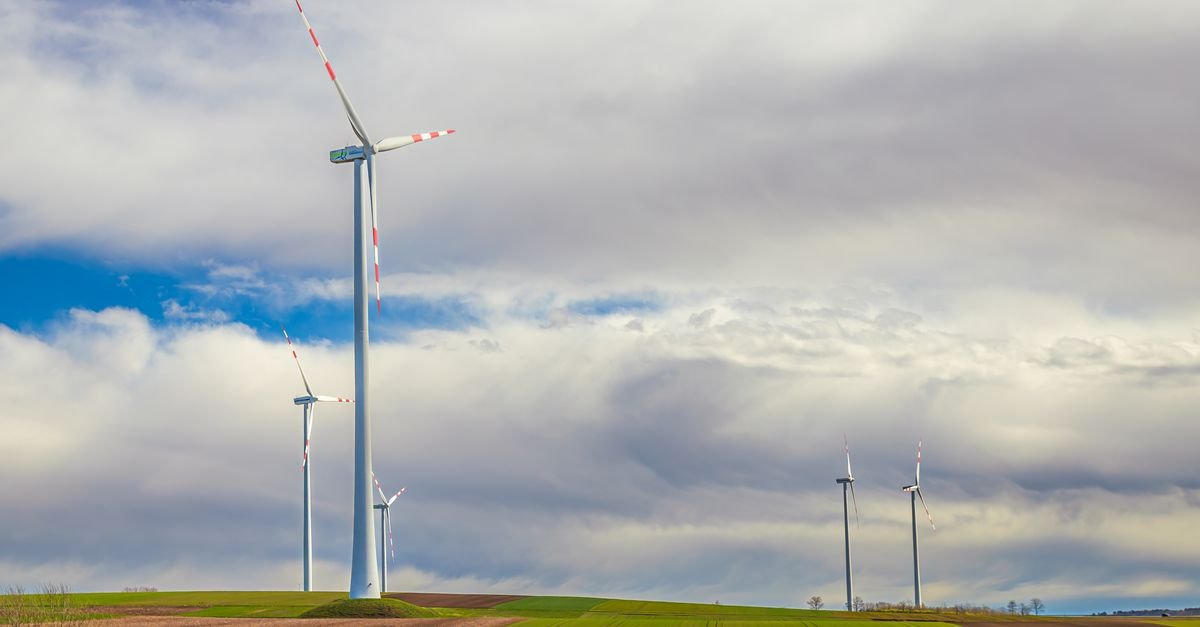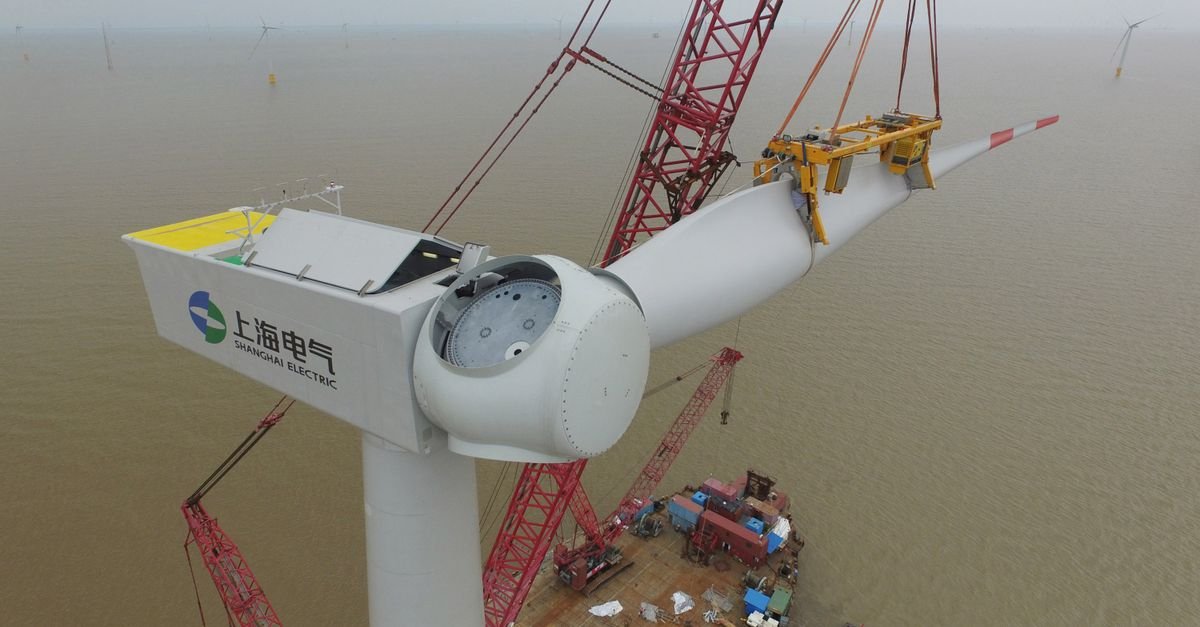
Wake steering is an emerging wind farm control strategy that intentionally misaligns upstream turbines to redirect their wakes, allowing downstream turbines to capture more wind energy and increase overall farm productivity. However, a new experimental study reveals an important trade-off: this technique comes with measurable acoustic penalties.
Researchers deployed an innovative acoustic measurement setup around a 2.2 MW industrial turbine, using 24 ground-level sound meters positioned at hub height around the machine at 15-degree angular intervals. This dense sensor network captured detailed noise directivity patterns across a wide range of wind conditions and yaw misalignment angles from −20 to +20 degrees, following protocols aligned with IEC 61400-11-1 acoustic standards.
The study found that without yaw control, turbine noise exhibits a typical two-lobe directional pattern, but with subtle asymmetries: the downstroke side produced 0.6 dB(A) more noise than the upstroke side, and the downwind direction was 0.4 dB(A) louder than upwind. These findings highlight deficiencies in existing analytical noise models used throughout the industry.
When wake steering was applied, the estimated overall sound power level increased by approximately 0.6 dB(A)—a modest but statistically significant increase. This rise likely stems from the aerodynamic changes induced by yaw misalignment, which alters blade loading and flow separation patterns.
These results underscore a critical operational consideration: while wake steering can boost wind farm energy output by improving downstream turbine performance, operators must weigh gains in power production against increased noise emissions and potential community relations impacts. The research emphasizes the urgent need for advanced, multi-physics noise models that accurately predict acoustic behavior under yaw control, enabling wind farm developers to optimize for multiple objectives simultaneously rather than focusing solely on electricity generation.