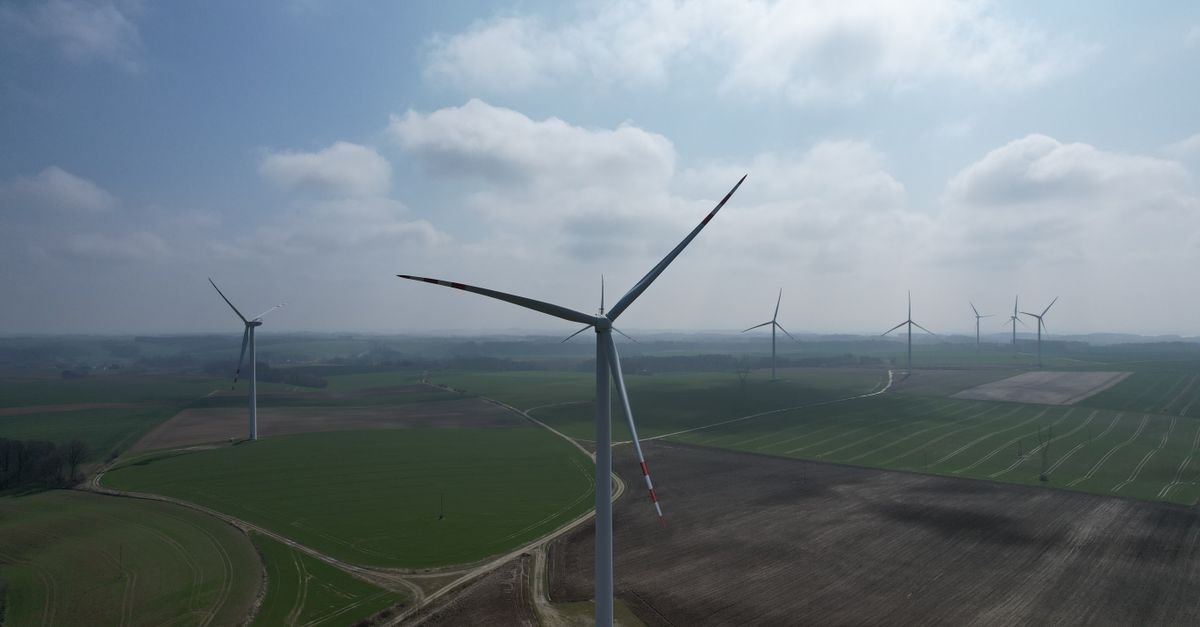
Selecting the right renewable energy technology for residential buildings depends heavily on local climate conditions, yet many design decisions rely on generic assumptions rather than location-specific analysis. A new climate-responsive framework addresses this gap by systematically evaluating solar and wind systems across different regional climates to support technology selection in green buildings.
Researchers compared photovoltaic and wind energy performance in Shiraz, Iran, and Abu Dhabi, UAE, using identical system designs but with location-specific climate inputs. The study employed industry-standard simulation tools—PVsyst for solar analysis and HOMER for hybrid system modeling—to generate comparable results. Testing revealed significant climate-driven performance differences: Shiraz achieved 33,049 kWh annual PV generation with a 75.09% performance ratio, while Abu Dhabi generated 30,991 kWh at 70.41% efficiency. Wind generation showed the opposite pattern, reaching only 1.23 MWh in Shiraz but 2.91 MWh in Abu Dhabi—2.37 times higher.
Sensitivity analysis quantified technology responsiveness to climate variations. Solar output changed proportionally to irradiation changes (±10% variation produced ±10% output change), while wind generation showed extreme sensitivity (±10% wind speed variations produced ±33% or −27% output changes). This nonlinear behavior has important implications for technology reliability under uncertain climate data.
Economic screening normalized costs by generation output, revealing PV in Shiraz as the most cost-effective option, approximately 6.6% lower than Abu Dhabi's solar systems. Wind economics favored Abu Dhabi substantially. Across both locations, solar technologies remained economically and technically dominant, though wind provided valuable complementary generation in higher-wind regions.
The framework systematically integrates climate assessment, technical modeling, uncertainty analysis, and preliminary economic evaluation to support building-level renewable planning decisions. By emphasizing location-specific climate characteristics rather than generic benchmarks, the approach enables designers and developers to make informed technology choices aligned with actual regional conditions and building performance requirements.