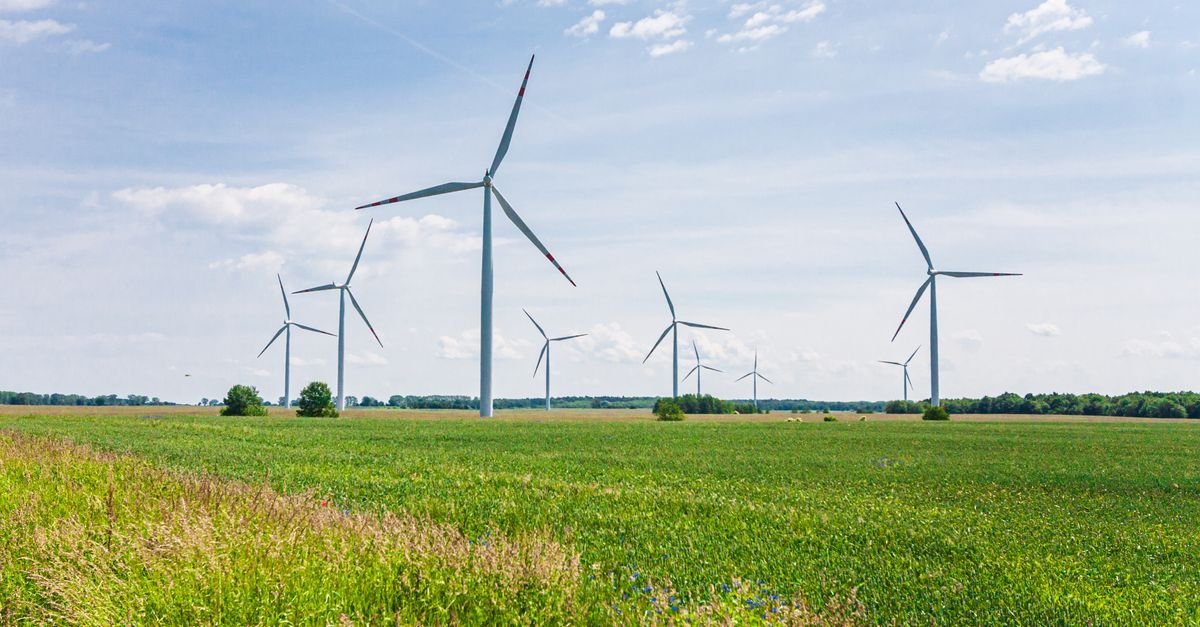
Variable renewable energy sources like wind power present a fundamental challenge to grid operators: their unpredictability demands optimization methods capable of handling complex, multi-objective scheduling in real time. A new study demonstrates how deep learning can solve this problem by optimizing hydrothermal dispatch—the coordinated scheduling of hydroelectric, thermal, and energy storage resources—while minimizing both generation costs and carbon emissions simultaneously.
Researchers tested four neural network architectures on a realistic 10-generator system over a 24-hour planning horizon. The architectures included long short-term memory (LSTM) and gated recurrent unit (GRU) networks, which excel at capturing time-series dependencies in wind generation and reservoir levels, along with deep feedforward and the novel Kolmogorov–Arnold network (KAN). All four models successfully solved the integrated scheduling problem while respecting physical constraints like generator limits, ramp rates, and reservoir storage bounds.
The study evaluated performance across three operational scenarios: pure economic dispatch minimizing fuel costs, emissions-only optimization, and balanced objectives that weight both. Results confirm that deep learning approaches can handle this multi-dimensional problem space more flexibly than traditional dynamic programming or mixed-integer linear programming methods, which struggle to scale with large system sizes or frequent re-optimization needs.
Critically, this research marks the first application of Kolmogorov–Arnold networks to hydrothermal scheduling, revealing their interpretability advantages alongside predictive accuracy. KANs' compositional structure may enable grid operators to understand *why* specific dispatch decisions emerge—a transparency requirement for regulatory approval and operator confidence.
As wind and solar penetration climbs globally, and pumped-storage capacity expands to provide seasonal energy arbitrage, utilities need dispatch tools that adapt to this complexity. Deep learning offers a scalable, adaptive foundation for real-time operation while supporting decarbonization targets. Future work should validate these approaches on larger, meshed transmission networks and integrate forecasting uncertainty directly into the optimization.