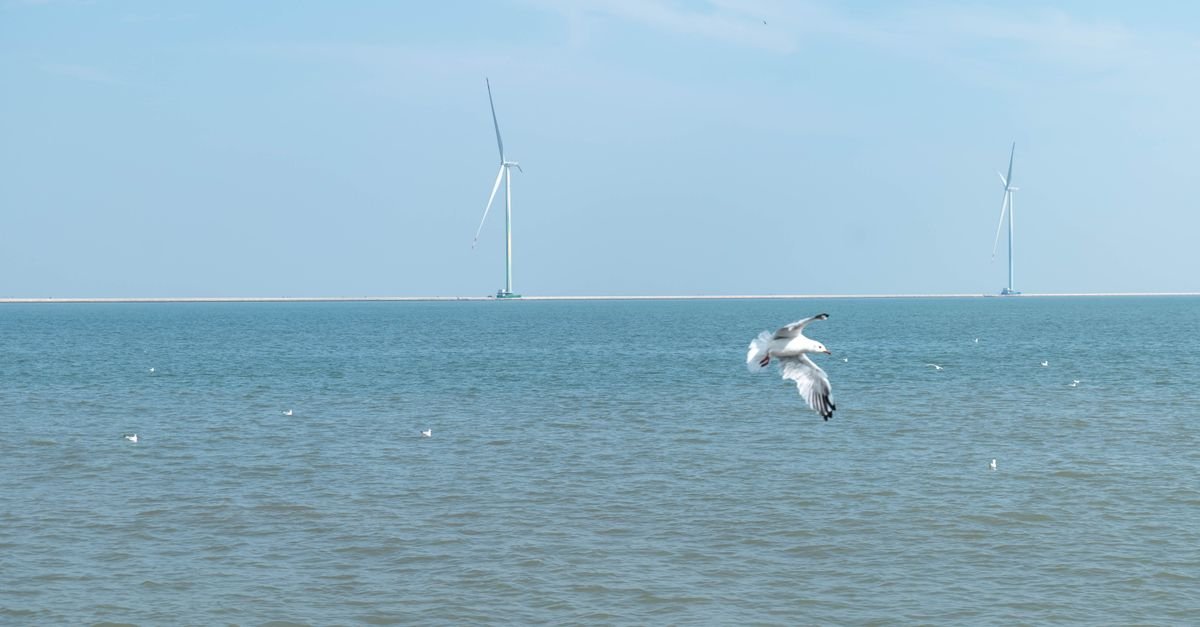
A comprehensive study examining wake interactions between large offshore wind farm clusters reveals substantial differences in how industry-standard engineering models predict energy losses compared to advanced atmospheric simulations. Researchers analyzed the Princess Elisabeth and Belgian–Dutch wind farm clusters in the southern North Sea using both WRF (Weather Research and Forecasting) atmospheric modeling and conventional fast-running engineering wake models, evaluating their predictions against actual 2016 meteorological data.
The analysis demonstrates that engineering wake models systematically predict higher wind farm power output and smaller wake losses than the WRF model. This discrepancy stems from fundamentally different representations of atmospheric processes and wake recovery mechanisms. When researchers separated wake losses into internal (within-farm) and external (farm-to-farm) components, external losses showed the largest spread between modeling approaches—a critical finding since clusters increasingly influence each other as offshore expansion accelerates.
Atmospheric stability emerged as the key variable driving model divergence. During stable stratification conditions—which occur more frequently in summer months—reduced turbulent mixing slows wake recovery and increases sensitivity to how different models formulate this process. Engineering models that explicitly account for turbulence-dependent wake recovery demonstrated closer agreement with WRF under these challenging conditions.
The implications extend beyond academic comparison. Developers rely on these models to optimize turbine spacing, forecast long-term yields, and justify investment decisions. Underestimating wake losses could lead to overoptimistic production forecasts and suboptimal cluster designs. The research quantifies this uncertainty and identifies specific atmospheric regimes where model selection matters most.
For practitioners, the findings suggest that single-model assessments introduce unquantified risk, particularly for large closely-spaced clusters in regions with frequent stable atmospheric conditions. Wind farm designers should consider using multiple modeling approaches or selecting engineering models with explicit turbulence-dependent recovery formulations when evaluating farm-to-farm interactions.