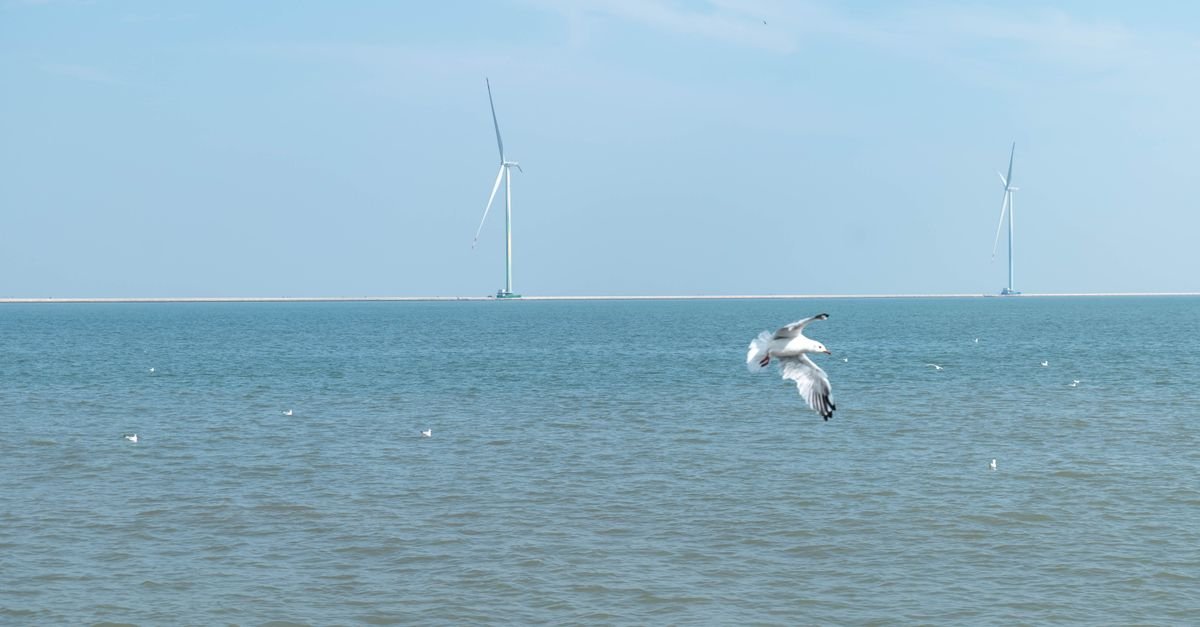
Offshore wind turbines operate in complex wind environments that extend far beyond the high-frequency gusts typically modeled in engineering simulations. A new study examined how slow, low-frequency wind variations—lasting from minutes to hours—affect the structural health and dynamic behavior of large offshore turbines.
Using advanced aeroelastic modeling with the HAWC2 simulation code, researchers analyzed a reference offshore turbine under three wind scenarios: conventional high-frequency turbulence, combined low- and high-frequency effects, and scaled turbulence matched to real-world measurements. Both fixed monopile and floating platforms were tested across a range of wind speeds.
The results reveal that low-frequency wind fluctuations substantially increase damage equivalent loads (DEL)—a measure of fatigue risk—in critical structures. Tower base moments and blade root bending moments showed the highest sensitivity, particularly at lower wind speeds where turbine output is increasing. These out-of-plane bending forces, driven by longitudinal wind pushing and pulling, pose a significant durability challenge.
Interestingly, torsional loads (such as yaw moments at the tower top) actually decreased under low-frequency conditions, attributed to improved wind coherence across the rotor disk. For floating offshore turbines, the platform's pitch and surge motions responded strongly to low-frequency disturbances, with pronounced effects on mooring line tensions.
The study identifies the most critical response band below 2×10⁻³ Hz, where structural resonances align with long-period wind variations. This finding has immediate implications for turbine design certification, maintenance planning, and wind farm operational strategy. Current design standards, which often rely on synthetic turbulence lacking low-frequency content, may underestimate real-world fatigue and overestimate component service life.
These insights support the need for updated wind modeling practices in offshore resource assessments and turbine design codes, ensuring that next-generation machines and farm layouts account for the full spectrum of atmospheric variability.