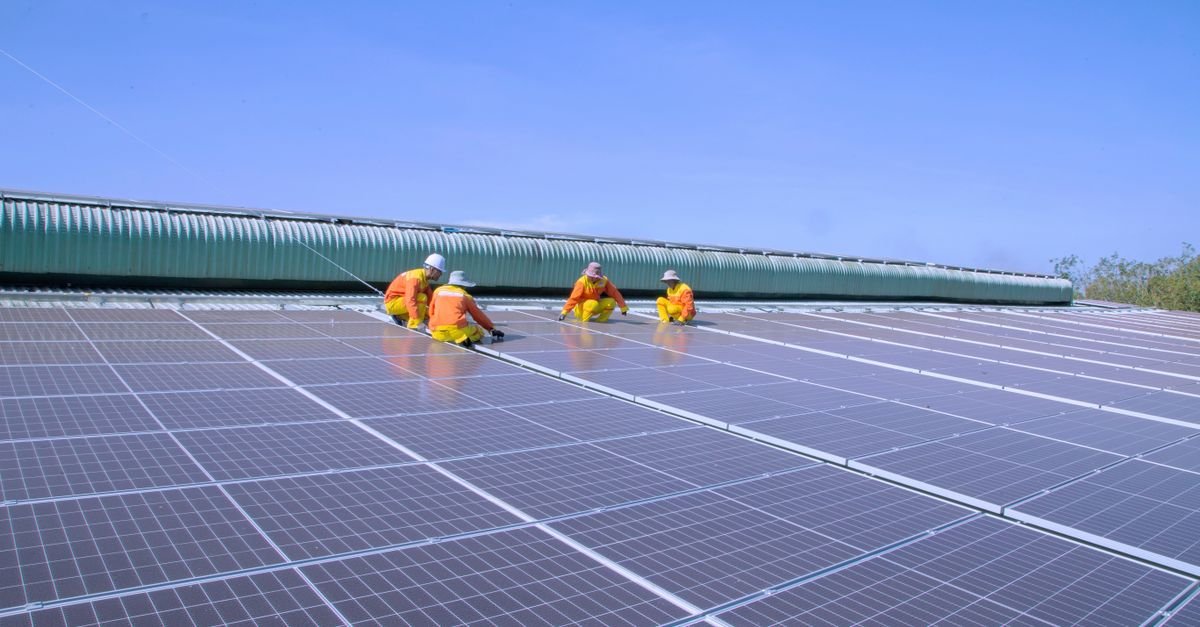
A comprehensive field study at Ghana's Kaleo Solar Farm has exposed a significant gap between manufacturer performance ratings and real-world operating conditions in sub-Saharan Africa. Over 14 months of continuous monitoring, researchers measured the temperature coefficient of a 163.52 kWp polycrystalline silicon array—a key parameter that quantifies how much output power declines as modules heat up during operation.
The results were striking: modules lost 0.473% of rated power for every degree Celsius above standard test conditions, substantially worse than the manufacturer's stated 0.36%/°C. This 31% gap translates to approximately 7,761 kWh per year in additional energy losses—losses that standard engineering assumptions would not predict.
Tropical operating conditions in northern Ghana pushed module temperatures to sustained levels of 46°C on average during daytime hours, with peaks exceeding 72°C. These temperatures far exceed the 25°C reference point used in laboratory testing, creating a widening performance gap that accumulates across a system's lifetime.
The implications for West African solar deployment are substantial. Developers, lenders, and utilities commonly rely on manufacturer datasheets and internationally standardized models when forecasting project economics. If thermal losses are systematically underestimated, actual energy production falls short of projections, threatening financial viability and investor confidence.
Moreover, the elevated thermal stress documented in this study aligns with reports of premature degradation and shortened service lives among PV installations across the region. Higher operating temperatures accelerate material aging, particularly in encapsulant systems and electrical components not designed for prolonged tropical duty.
The findings underscore a critical need for region-specific performance standards and design methodologies tailored to tropical climates. Rather than relying solely on international templates, sub-Saharan African solar markets require field-validated coefficients and simulation tools that reflect local irradiance, humidity, wind patterns, and mounting configurations. Such data-driven approaches will enable more accurate yield predictions, better-informed financing decisions, and more durable solar infrastructure.