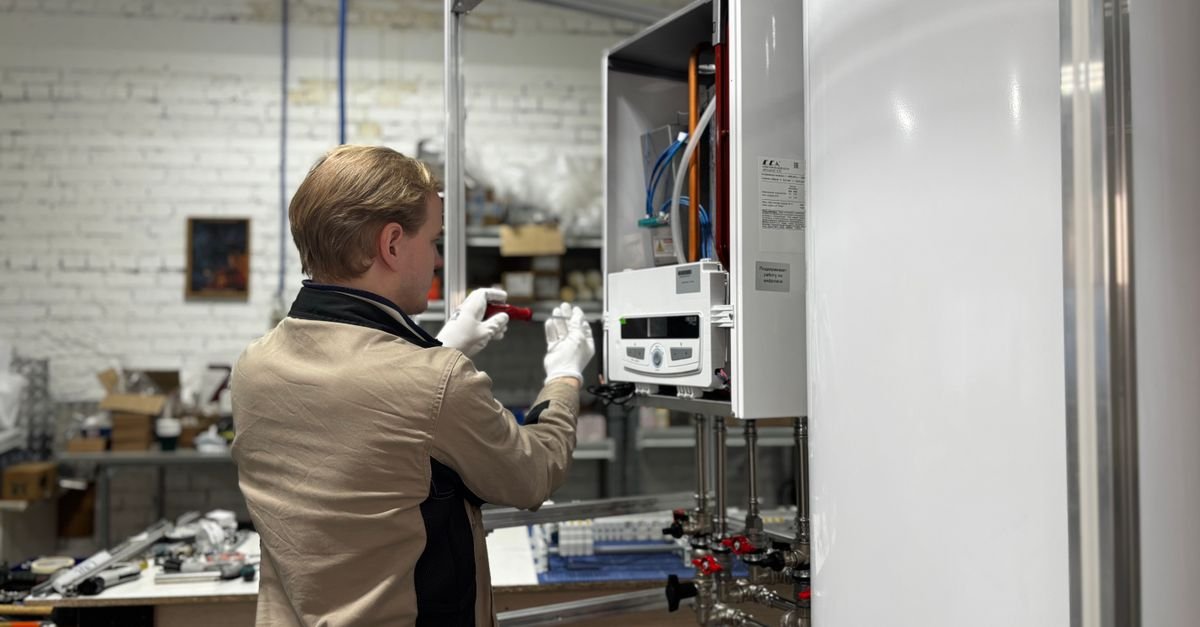
High-temperature heat pumps operating above 200 °C are increasingly vital for industrial decarbonization, particularly in waste heat recovery applications. However, their efficiency depends critically on the complex interplay between heat exchanger design, refrigerant properties, and system thermodynamics. Traditional design approaches typically lock in heat exchanger geometry and operating parameters early, missing opportunities for cost reduction through integrated optimization.
A new study addresses this gap by developing a comprehensive thermo-economic framework that treats multiple design variables as simultaneous optimization targets. Rather than fixing plate heat exchanger dimensions and pinch point temperature differences—the temperature differential needed to drive heat transfer—the research explores 34,944 geometric configurations paired with 16 pinch point scenarios and variable refrigerant compositions.
The analysis evaluated four key heat exchanger parameters: plate length, width, corrugation pitch, and corrugation height. Critically, the model explicitly quantifies how pressure losses in both evaporator and condenser affect compressor power consumption and total system cost. This represents a departure from conventional design practices that often overlook pressure-drop induced penalties.
Results identify an optimal configuration using an 8% carbon dioxide and 92% acetone refrigerant mixture, achieving the lowest levelized cost of heat at approximately €0.067 per kilowatt-hour. The research reveals that evaporator pressure drop is the dominant performance constraint, contributing more substantially to cost increases than condenser pressure drop. This finding suggests future design efforts should prioritize evaporator efficiency.
The framework's simultaneous optimization of geometry, refrigerant composition, and operating conditions demonstrates measurable economic benefits for industrial heat recovery projects. As industries pursue deep decarbonization through electrification and waste heat utilization, such integrated design methodologies could enable wider deployment of high-temperature heat pump systems with improved economic viability and faster payback periods.