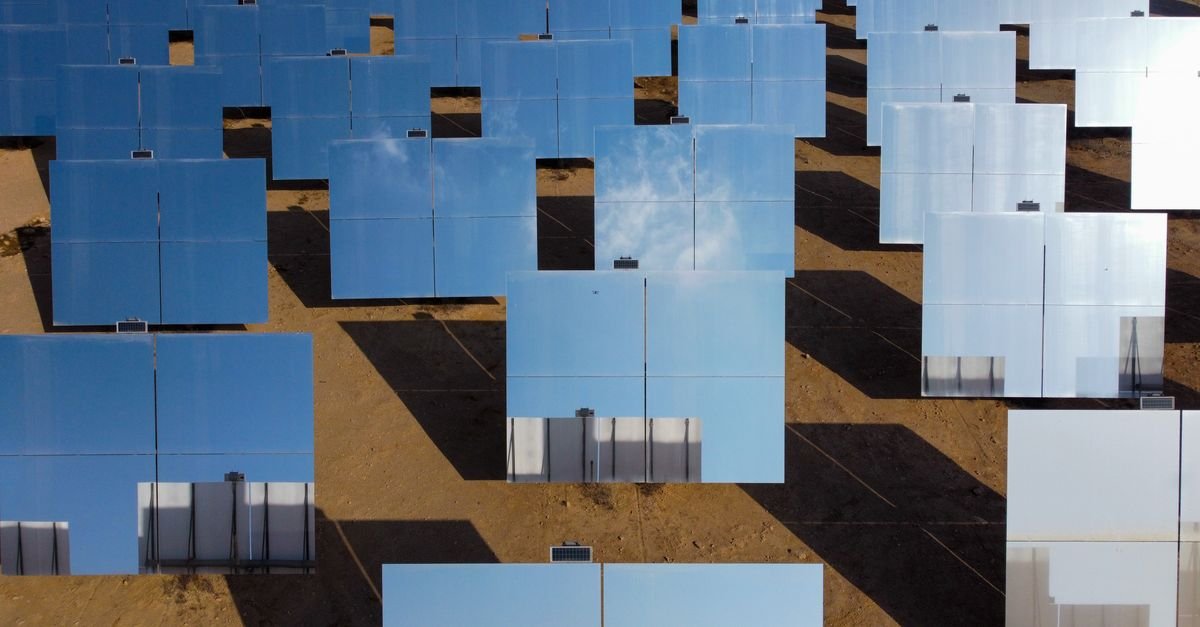
A new hybrid solar power architecture integrates concentrated solar power (CSP) technology with mechanical heat engines and advanced thermal storage to overcome solar intermittency constraints. Researchers conducted field trials in Oman using two parabolic dish concentrators: a smaller 3.25 m² unit driving a Stirling engine for immediate electricity generation, and a larger 6.00 m² concentrator charging a thermal storage system for extended output.
The Stirling engine, a closed-cycle heat engine operating on the principle of cyclical gas expansion and compression, achieved peak electrical output of 50 W at receiver temperatures around 330°C, corresponding to 31.9% thermal efficiency—significantly above typical photovoltaic conversion rates. However, the standalone Stirling engine efficiency was measured at 17%, indicating substantial room for mechanical and thermal optimization.
The critical innovation lies in thermal energy storage using a eutectic salt mixture (potassium nitrate and sodium nitrate), which stores heat via phase change. This PCM unit sustained stable 35 W power output for six consecutive hours after solar collection ceased, demonstrating the feasibility of extended dispatch periods. Exergy analysis revealed maximum exergy efficiency of 14.2%, with primary energy losses occurring at the receiver surface and during finite-temperature heat transfer processes.
The system addresses fundamental limitations of variable renewable energy by decoupling generation from collection. Rather than immediately converting all incident solar radiation, excess thermal energy is stored as latent heat in the PCM, then released controllably to maintain power output during cloud cover or evening hours.
While current performance metrics—50 W electrical output—suggest application primarily to off-grid or remote installations, the scalability pathway is clear. Larger dish arrays and optimized receiver designs could increase output proportionally. For solar-abundant regions with limited grid access, this technology offers an alternative to battery storage, leveraging mature thermodynamic cycles and abundant thermal materials.