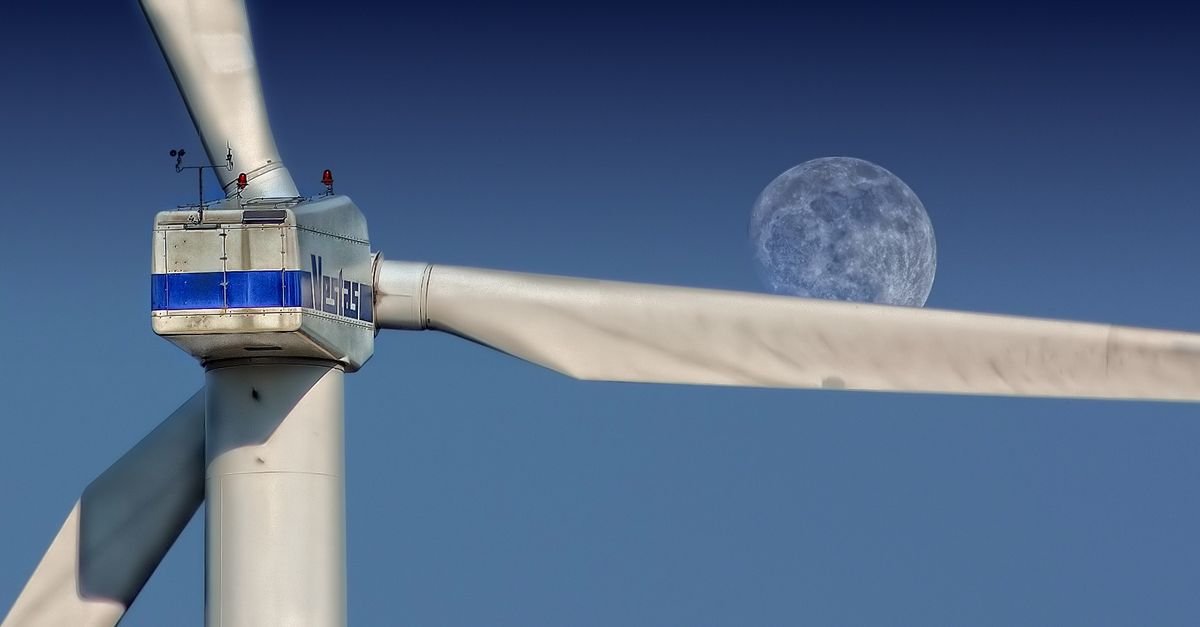
Wind turbine efficiency depends critically on airfoil design, with camber—the curvature of the blade profile—emerging as a key optimization variable. Researchers conducted a comprehensive investigation into how S-series airfoil camber affects both aerodynamic and thermodynamic performance across five attack angles (0° to 20°) in turbulent flow conditions.
Traditional aerodynamic analysis focuses on lift-to-drag ratios, but this study applied second-law thermodynamic analysis to identify and quantify energy losses throughout the flow field. By examining entropy generation rates and exergy destruction, the researchers gained deeper insight into where and why energy is wasted in turbine operation.
Results show that increasing airfoil camber significantly enhances second-law efficiency, with measured improvements reaching 242.86% across tested conditions. Simultaneously, irreversibility—a measure of thermodynamic inefficiency—decreased by 18.37%, indicating less wasted energy in the flow system. These gains directly translate to improved power generation without increasing blade size or rotational speed.
The analysis revealed that entropy generation concentrates in two regions: the turbulent wake trailing the blade, and the leading edge where flow separation and boundary layer development occur. By understanding these loss mechanisms, designers can refine airfoil profiles to minimize local irreversibility.
This research bridges aerodynamic and thermodynamic disciplines, moving beyond conventional design optimization. Rather than pursuing maximum lift-drag ratios alone, engineers can now target specific camber values that minimize total energy destruction. The approach has implications for retrofitting existing turbines and designing next-generation rotors for onshore and offshore applications.
The entropy-generation methodology provides a quantitative framework for comparing candidate airfoil designs during preliminary engineering phases, potentially reducing costly prototype testing and accelerating the deployment of more efficient wind resources worldwide.