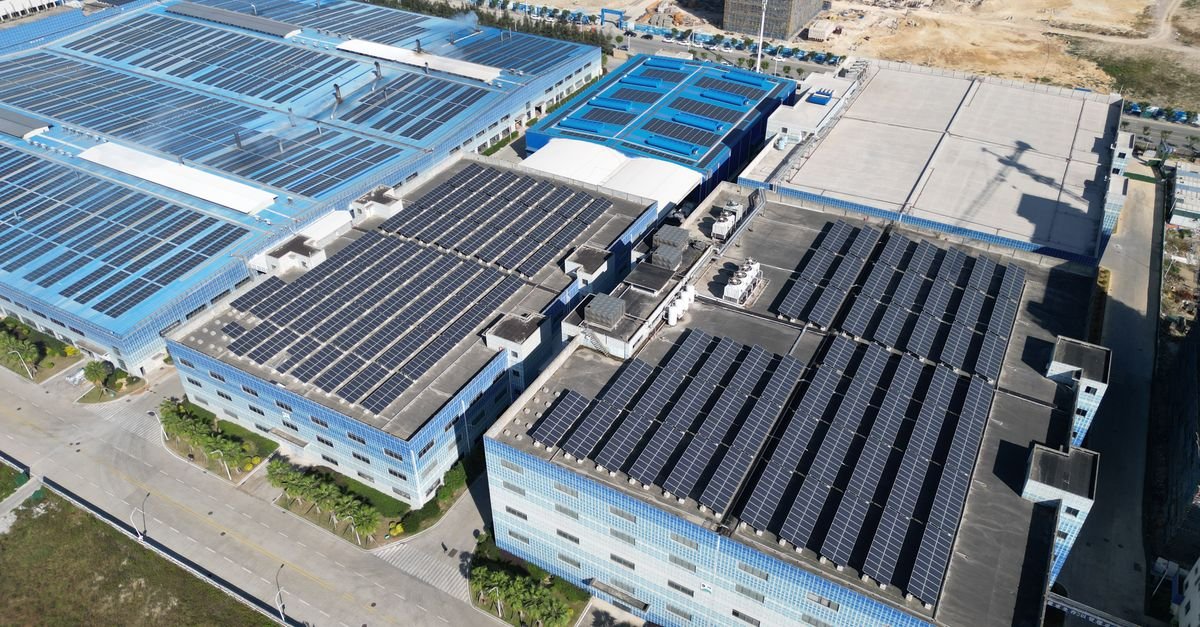
As solar photovoltaic systems proliferate across modern grids, accurate electrical modeling has become essential for reliable grid operations. Large-scale PV arrays typically feed power through inverters into distribution and transmission networks, making their performance critical during peak demand periods and for demand response programs. Current industry practice relies on single-diode aggregated models that treat an entire array as one lumped electrical element, simplifying computation but sacrificing realism.
Researchers at arXiv have developed an alternative approach: a per-panel circuit model where each photovoltaic panel is represented individually using a single-diode equivalent circuit, then interconnected to simulate the full array. This method captures real-world phenomena that aggregated models miss, particularly partial shading and hotspots—localized temperature rises caused by uneven irradiance or manufacturing defects.
The team established mathematical conditions under which their per-panel model is equivalent to the traditional aggregated model, validating the approach's theoretical foundation. They then used real-world panel parameters to simulate both ideal conditions and non-ideal scenarios, comparing maximum power point tracking performance.
Results demonstrate substantial gains in accuracy. When modeling partial shading conditions, the per-panel model estimated real power output 21.2% more accurately than the single-diode aggregate model. Under hotspot scenarios, accuracy improved by 8.1%. These differences are meaningful for utilities scheduling reserves, operating markets pricing renewable supply, and engineers designing string inverter logic.
The per-panel model represents a practical bridge between cell-level physics and system-level control behavior—detailed enough to reflect actual panel interconnections and failure modes, yet computationally tractable for grid simulation and real-time forecasting. As penetration levels rise in solar-heavy regions, such improved fidelity supports more reliable grid operations and better economic dispatch of hybrid generation portfolios.