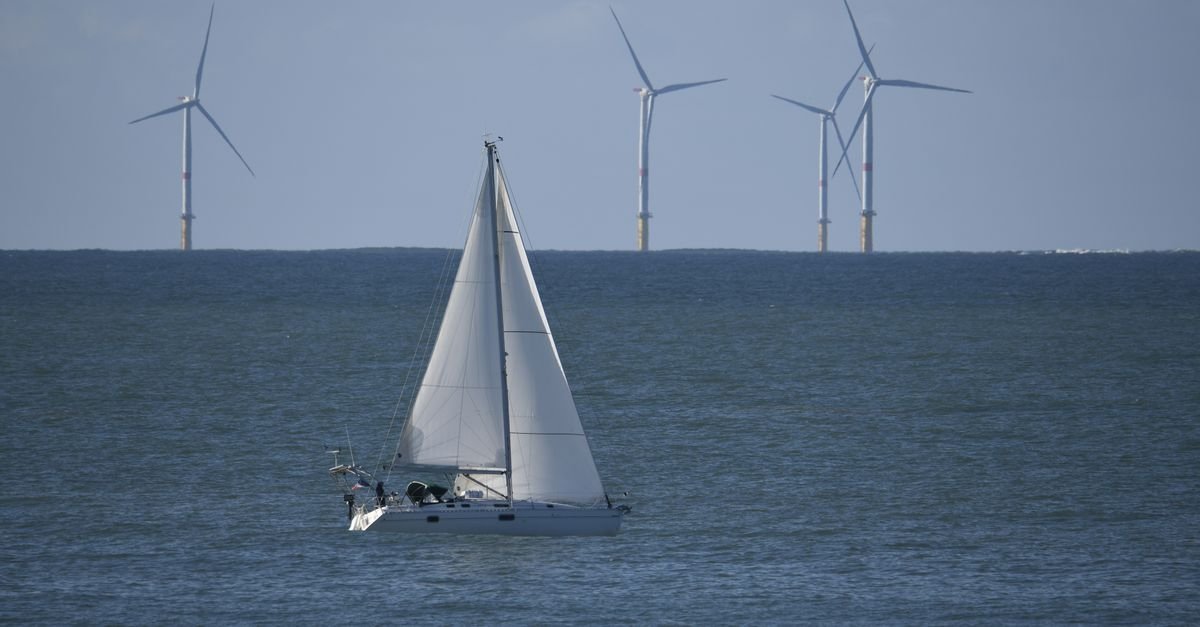
Offshore energy systems increasingly integrate diverse generation sources, energy storage, and conversion technologies that interact through power electronic interfaces. When multiple grid-forming and grid-following converters operate simultaneously, their control interactions can produce poorly damped oscillations that threaten grid stability. Analyzing these dynamics in full detail using comprehensive electromagnetic transient simulations is computationally prohibitive for multi-gigawatt installations.
Researchers have addressed this challenge by developing a reduced-order modelling framework that captures dominant system dynamics while dramatically reducing computational burden. The approach uses MATLAB/Simulink linearization procedures to generate tractable state-space representations of complex offshore systems containing wind farms, electrolysers, HVDC transmission links, and reactive power compensation equipment.
The reduced-order model preserves the essential small-signal characteristics that determine stability margins while eliminating high-frequency transients irrelevant to control design. This enables rapid eigenvalue analysis and parametric sensitivity studies—critical for understanding how control parameter changes affect damping and oscillation frequencies.
The framework was validated against detailed electromagnetic transient simulations in PSCAD/EMTDC, showing excellent agreement in dynamic responses and stability predictions. This validation confirms that the simplified model captures true system behavior accurately enough for practical engineering applications.
The parametric sensitivity analysis quantifies how variations in controller gains, phase-locked loop tuning, and converter ratings influence system damping. This explicit guidance enables engineers to systematically optimize control settings without trial-and-error approaches or expensive full-order simulations.
For grid operators and system planners developing offshore wind-dominated grids with hydrogen production and HVDC export, this methodology represents a significant practical advance. It enables stability assessment during the design phase and supports operational decision-making regarding controller coordination across multiple converter stations. As offshore installations grow larger and more interconnected, computationally efficient stability analysis tools become increasingly valuable for ensuring reliable, stable operation.