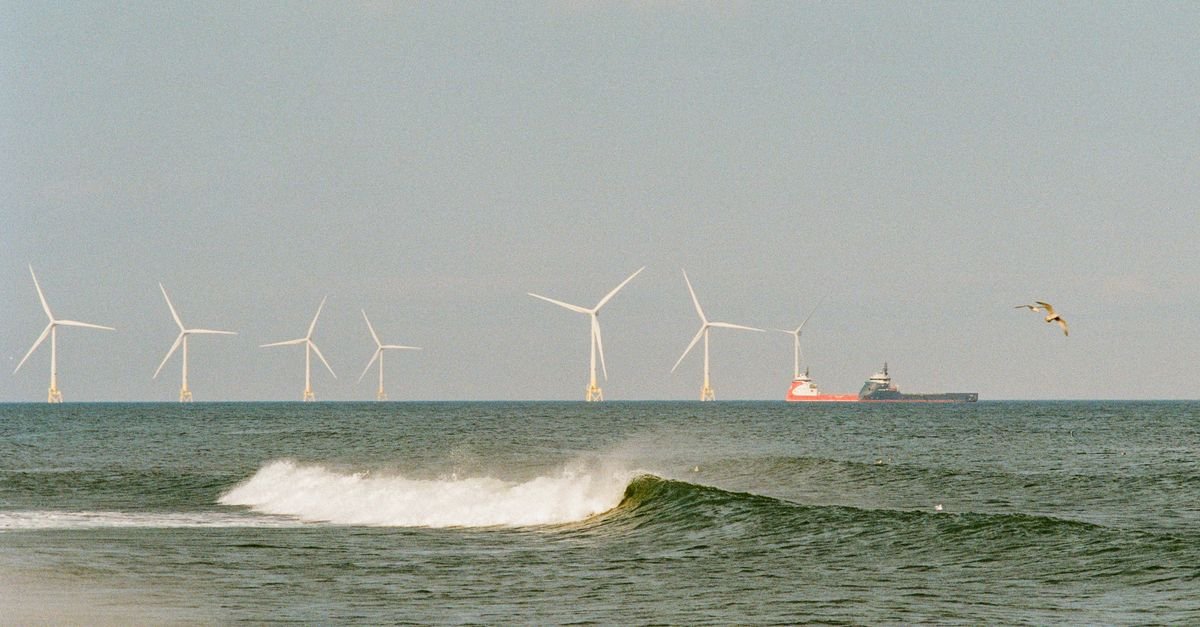
Structural health monitoring in offshore wind turbines traditionally relies on networks of strain gauges and accelerometers distributed throughout support structures—an approach that significantly increases installation costs, maintenance burdens, and operational complexity. Researchers have now demonstrated that a single, carefully calibrated biaxial accelerometer combined with an accurate structural model can replicate strain estimates across an entire turbine support structure with minimal error.
The innovation centers on modal decomposition combined with displacement estimation from tilt-error-compensated acceleration data. By integrating acceleration measurements over time and accounting for sensor orientation drift, the method reconstructs the tower's static bending line and projects estimated displacements onto modal coordinates. This enables inference of strain at unmeasured locations along the structure.
Validation occurred in two phases. Laboratory testing on a scaled model demonstrated displacement and strain errors below 2.2% and 5%, respectively. Full-scale validation at an offshore wind farm showed damage-equivalent load estimates at the transition piece—a critical interface between tower and foundation—with mean errors under 9%. The remaining discrepancies stem from model simplifications and idealized load assumptions inherent to the approach.
The quasi-static frequency band captured by this method accounts for the majority of fatigue accumulation in offshore structures, making it particularly valuable for lifetime assessment and maintenance planning. By eliminating redundant sensors, operators reduce installation time in harsh offshore environments, lower ongoing calibration requirements, and decrease failure points in monitoring systems.
This technique represents a meaningful step toward streamlined structural health monitoring for wind energy assets. As offshore turbines grow larger and operate in more challenging environments, the ability to extract rich diagnostic information from minimal instrumentation becomes increasingly valuable. The approach also has potential application to other slender structures, including bridges and tall buildings, where similar loading patterns govern structural fatigue.