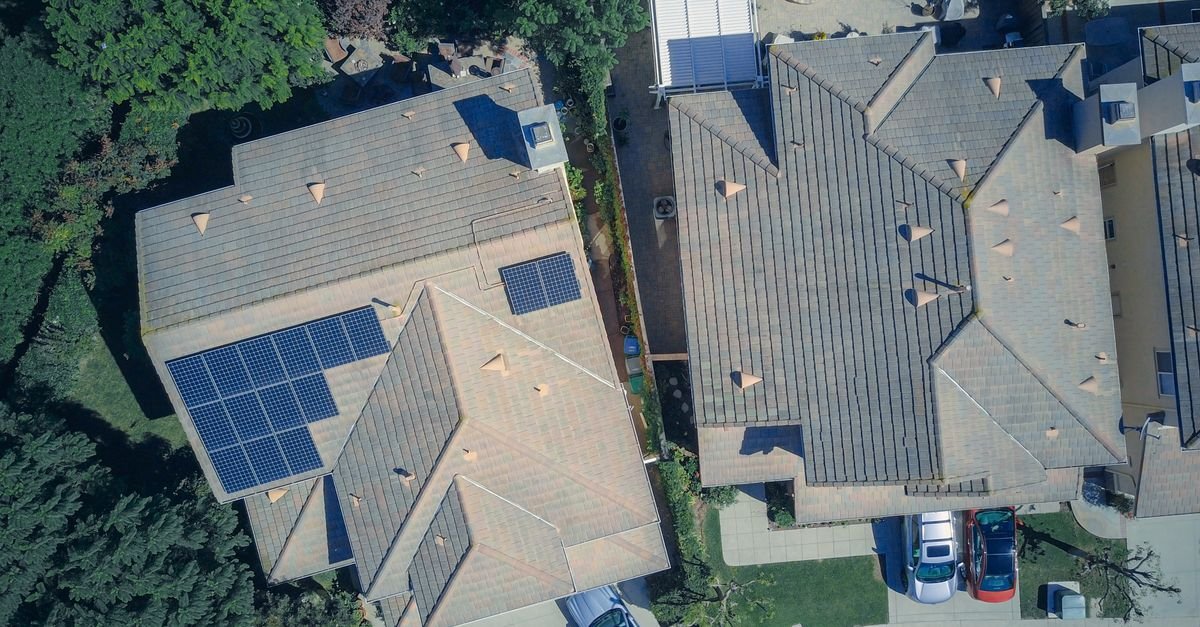
Solar power forecasting remains a critical challenge for grid operators balancing increasing photovoltaic capacity with variable renewable generation. Existing forecasting models struggle to capture the complex temporal patterns inherent in solar irradiance and power output, particularly sudden weather-driven fluctuations and the nonlinear relationships between meteorological variables and generation.
Researchers have proposed a hybrid deep learning architecture that addresses these limitations through a three-stage approach. The method first decomposes solar power time series into trend, seasonal, and residual components using seasonal-trend decomposition based on Loess (STL), then applies variational mode decomposition (VMD) to the residual component to extract multiscale temporal information. This decomposition step isolates different frequency components of solar variability, allowing downstream models to focus on specific patterns more effectively.
The forecasting engine combines convolutional neural networks (CNNs) to capture local fluctuation features with iTransformer architecture to model long-term dependencies and nonlinear relationships between weather inputs and power output. Rather than relying on manual hyperparameter tuning, the model employs the Phototropic Growth Algorithm (PGA) for automated optimization, improving generalization across different seasonal conditions.
Validation using real operational data from a photovoltaic facility in Alice Springs, Australia, demonstrates substantial improvements over baseline iTransformer and other conventional deep learning models. The proposed approach reduced root mean square error by approximately 19.12% and mean absolute error by 17.43% compared to baseline methods, maintaining strong performance across diverse seasonal scenarios.
These improvements have practical significance for grid operators and renewable energy developers. More accurate short-term solar forecasts—typically 1 to 6 hours ahead—enable better unit commitment decisions, reduced reserve requirements, and improved frequency regulation. The methodology's demonstrated robustness across seasonal variations suggests applicability to solar installations across diverse geographic regions and climate zones.