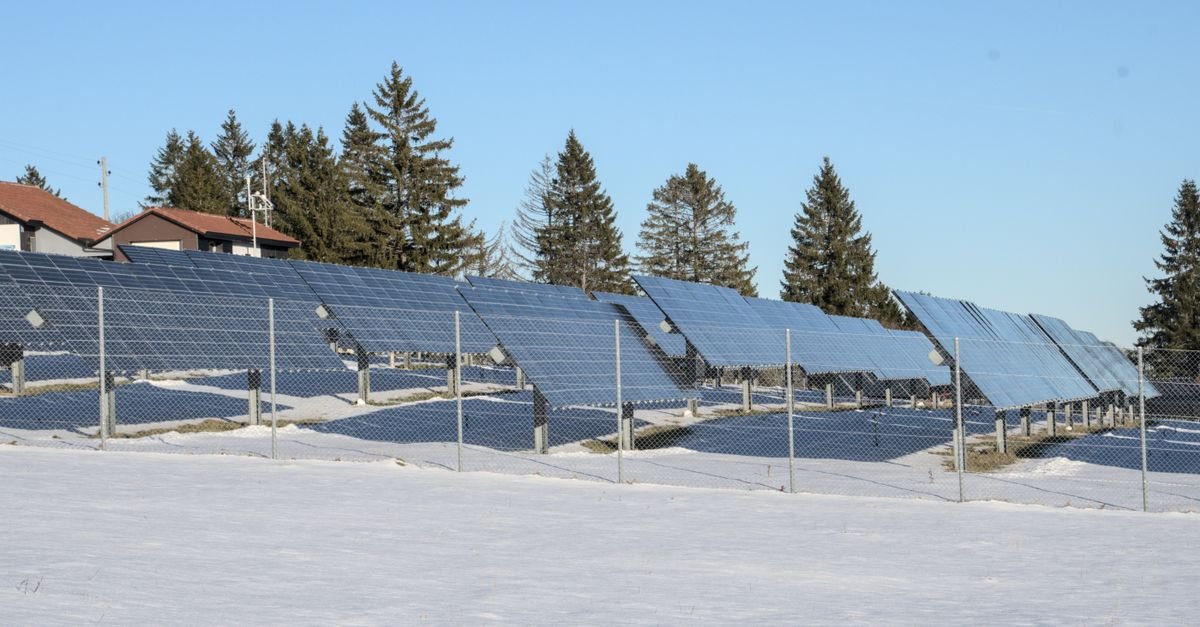
Partial shading remains a significant challenge for solar photovoltaic systems in urban environments, where buildings, trees, and other fixed obstructions cast shadows across arrays throughout the day and across seasons. This shading can reduce overall system efficiency by 15-30 percent or more, depending on configuration and shadow patterns. While dynamic array reconfiguration strategies exist to combat this issue, their complexity and computational demands make them impractical for widespread deployment.
Researchers have now proposed a static array reconfiguration technique using integer linear programming that addresses these limitations. Unlike dynamic approaches requiring continuous switching and real-time computation, static reconfiguration involves a one-time physical rearrangement of PV modules within the array structure. The key innovation lies in explicitly modeling the actual shading pattern caused by fixed obstructions rather than relying on generalized assumptions.
The methodology accounts for seasonal and diurnal variations in shadow positions, optimizing module placement to minimize mismatch losses and maximize power output. Researchers formulated the optimization problem as an integer linear program, enabling systematic evaluation of multiple array configurations. Testing compared the proposed technique against existing SAR methods using both square-matrix simulations and a non-square prototype developed at laboratory scale.
Results demonstrated consistent performance improvements across both simulation and experimental scenarios. The approach successfully delivered higher power output than conventional reconfiguration techniques under various shading conditions. The static nature of the solution eliminates hardware switching complexity while maintaining the ability to accommodate practical, time-varying solar irradiance patterns.
This development has important implications for urban solar deployment, where shade-free installation sites are unavailable. By intelligently rearranging existing modules rather than requiring expensive dynamic systems or oversized installations, the technique improves economics and feasibility of distributed solar generation. The method is particularly valuable for rooftop and small-scale applications where system simplicity and reliability are paramount.