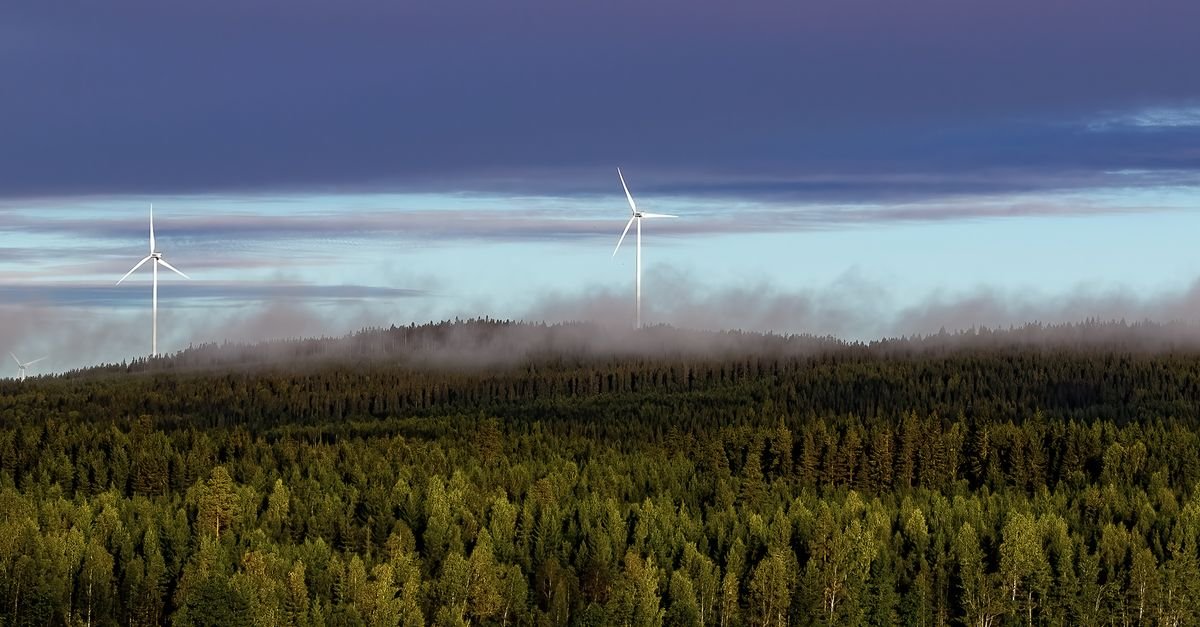
Accurate wind resource assessment is fundamental to wind energy development, yet conventional numerical weather prediction (NWP) models like ERA5 and Japan Meteorological Agency's Meso-Scale Model demand substantial computational resources and processing time, constraining their utility for local-scale planning. Researchers have developed a streamlined methodology combining inverse distance weighting (IDW) interpolation, logarithmic wind-profile theory, and Ekman spiral mechanics to estimate wind conditions directly from ground-based weather station networks.
The framework leverages existing surface pressure observations and atmospheric dynamics principles rather than running full NWP simulations. By incorporating the Ekman spiral—which describes how wind direction and speed vary with altitude due to atmospheric friction—the method accurately reconstructs three-dimensional wind behavior from two-dimensional station data. Testing against data from Japan Meteorological Agency's Automated Meteorological Data Acquisition System (AMeDAS) network across 806 stations over five years demonstrated competitive performance: the proposed approach achieved lower root mean square error, mean absolute error, and median absolute error compared to ERA5 and JMA MSM outputs.
The practical advantage lies in computational efficiency and scalability. Where NWP models require hours of processing per forecast cycle, this method executes rapidly on standard computing infrastructure, enabling near-real-time resource assessment across dispersed locations. This capability is particularly valuable for identifying high-potential sites in mountainous or remote regions where dense observational networks are unavailable, and for rapid screening during project feasibility studies.
The methodology integrates established meteorological principles with contemporary interpolation techniques, offering developers and utilities an accessible tool for preliminary wind resource characterization. While not replacing high-fidelity NWP for operational forecasting, this approach accelerates the resource assessment phase of wind project development and supports distributed measurement networks. The validation against Japan's extensive AMeDAS infrastructure suggests applicability across similar climate zones and station densities in other regions.